The earliest remains
Before the first constructions, traces of Celtic civilization were found around the estate (an oppidum, a wedding site). The Celtic period in the region spans from the end of the Bronze Age (8th century BC) to the end of the Iron Age (2nd century BC).
Later, thanks to writings and archaeological research, it is known that the Romans were present in the Luberon massif. Soldiers, officials, merchants, pilgrims, and postmen used the Via Domitia. The Via Domitia was a Roman road connecting Italy to the Iberian Peninsula via Narbonensis Gaul and was built between 118 BC and 79 AD. Roman sarcophagi were notably found on the estate (now displayed at the Art Museum).
17th Century
Saqui-Sannes: The Family Legacy
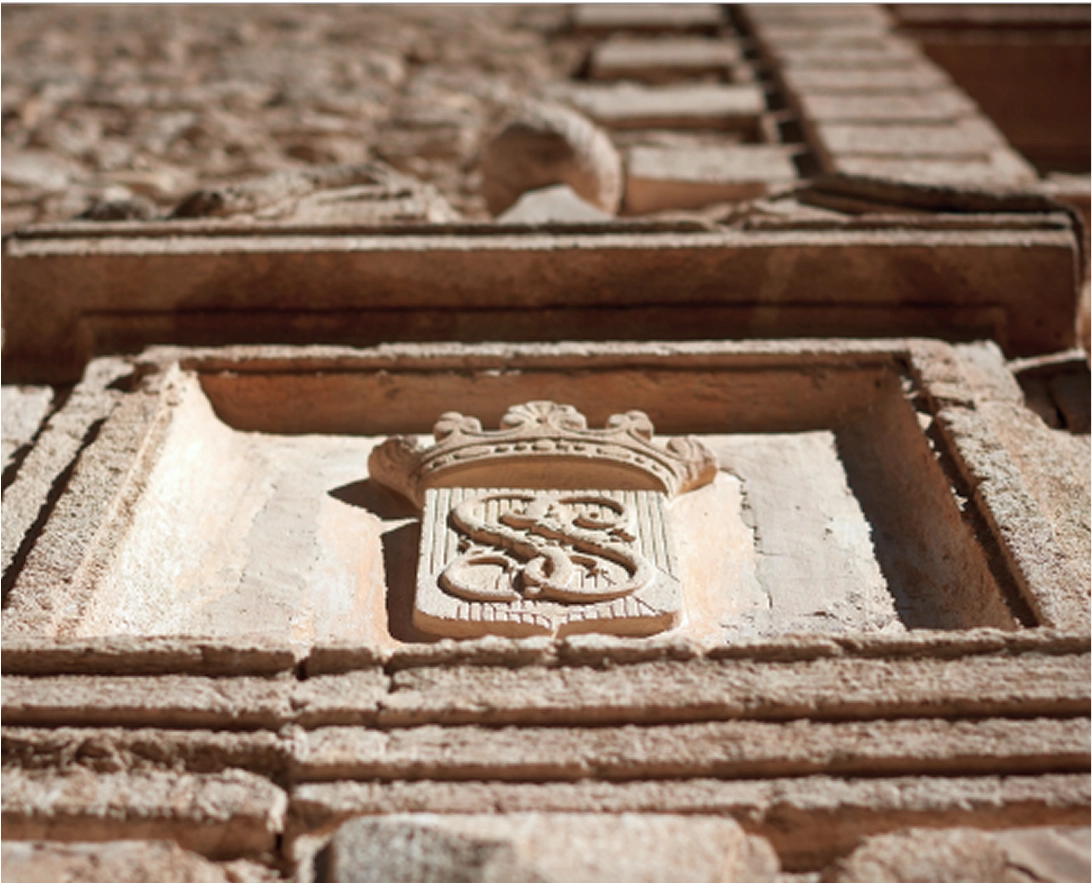
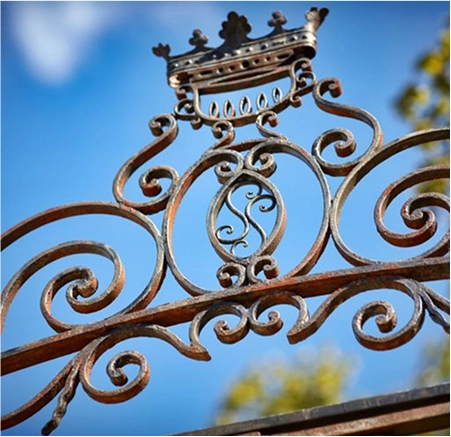
Long ago, a defensive castle watched over the lands of Sannes, but it disappeared with the end of the feudal wars, giving way to cultivated lands under the protection of the lord of Ansouis until the 16th century. Today, on the road coming from Pertuis, two pillars with massive capitals surprise you; they frame a wrought-iron gate whose pediment bears the arms of Saqui-Sannes—two intertwined “SS” topped with a baron’s crown. This monumental gate, erected around 1680, sums up the history of this family who, over three centuries, transformed, enlarged, and improved the castle and its lands. A long avenue of plane trees (formerly poplars) leads you to the door of this charming residence.
1603
Jean Thibaud de Tisati:
The Origins of the Estate
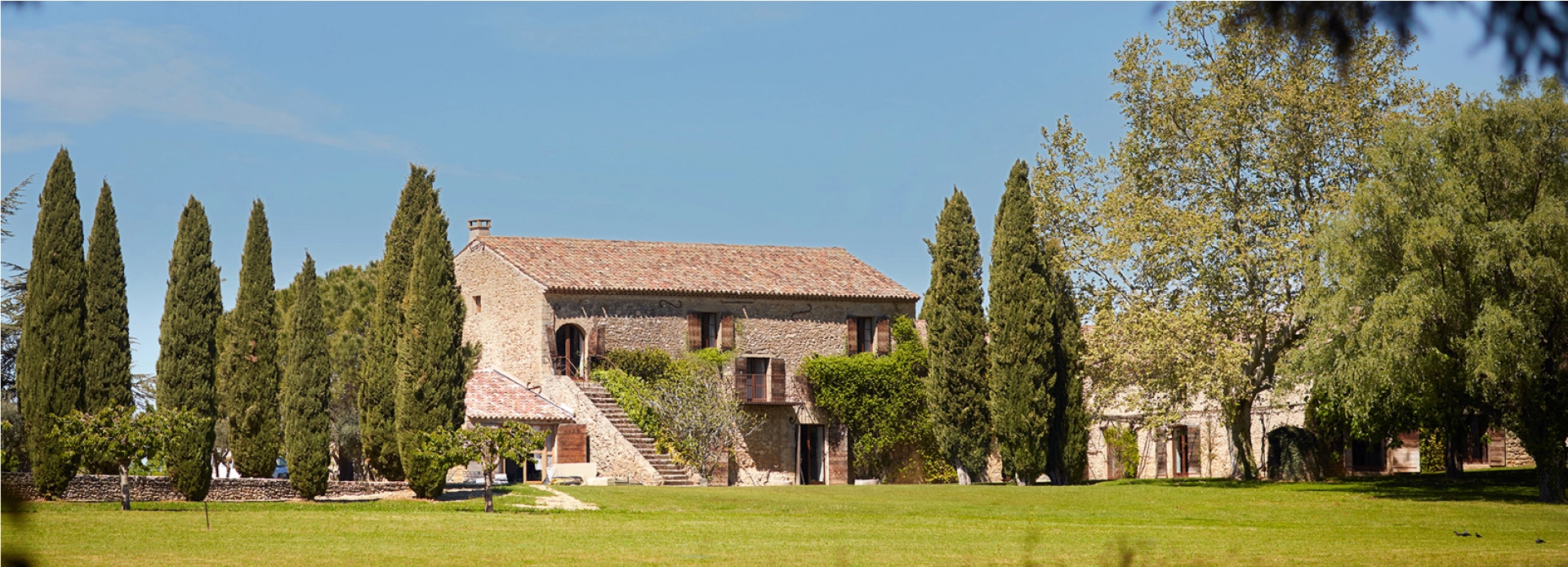
The history of the estate begins in 1603, when Jean de Tisati, a parliamentary officer from an old Aix-en-Provence family of the robe nobility, acquires the lands of Sannes from the lord of Ansouis. This gentleman was not the type to leave the land fallow; he quickly set about developing the soil. He first purchased the property of the Saint Jean spring to ensure irrigation, then he built a bastide.
17th–19th centuries
Melchior de Tisati:
The Lordly Soul of the Estate
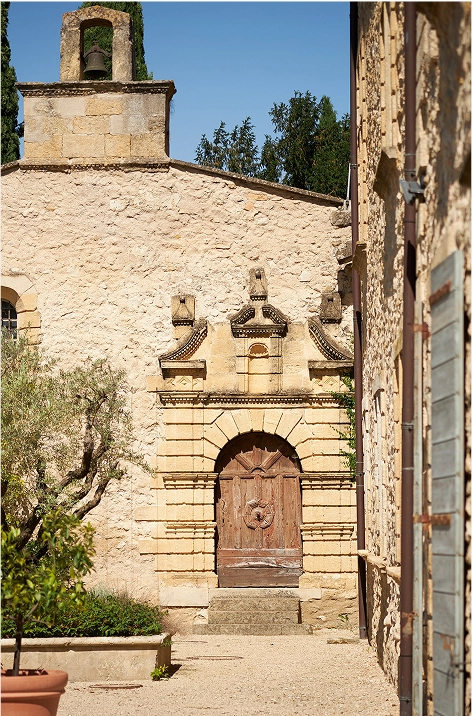
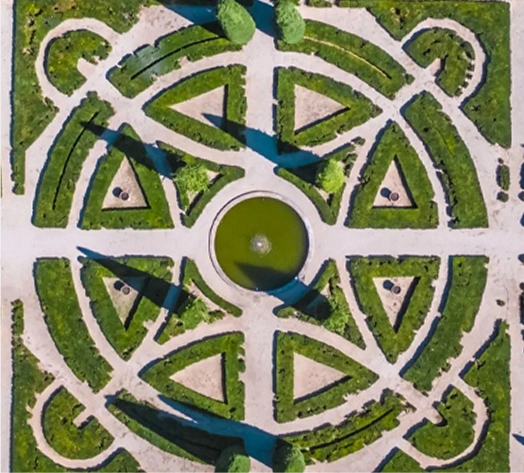
And it is his son Melchior who will breathe the lordly soul into the estate. In 1661, he had a chapel built—discreet but full of character. Later, around 1679, he transformed the surroundings of the bastide by creating a formal French garden, terraces with a large basin, and a fountain in front of a balustrade. This gentleman’s residence bears his mark down to the smallest decorative details: his initials “MT” adorn the ceiling of the vestibule. Also, on the undersides of the staircase ascent: the first section is simple, while the underside of the third flight features a more refined, fluid décor with graceful curves, as in the 17th century the ground floor was reserved for service areas, and the reception rooms were located on the first floor.
In the 18th century, the vineyard covered about 21 hectares, but like all others in the region, it was devastated by phylloxera in the 19th century.
1973
Madame Faucher-Poilpot:
The Renaissance of the Vineyard
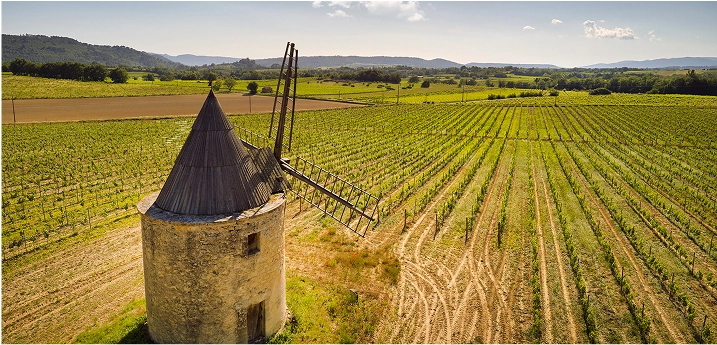
It would take until Madame Faucher-Poilpot to hear the harvest songs once again. Little by little, she restored the Sannes estate. The estate’s operation then took on a primarily viticultural purpose. In 1973, the efforts bore fruit: 2,500 hectoliters of a natural wine of about 13° were produced. A modern wine cellar, simple and functional, was built between the château and the farmhouse.
1990
Lord Paul and Lady Hamlyn:
The English Influence
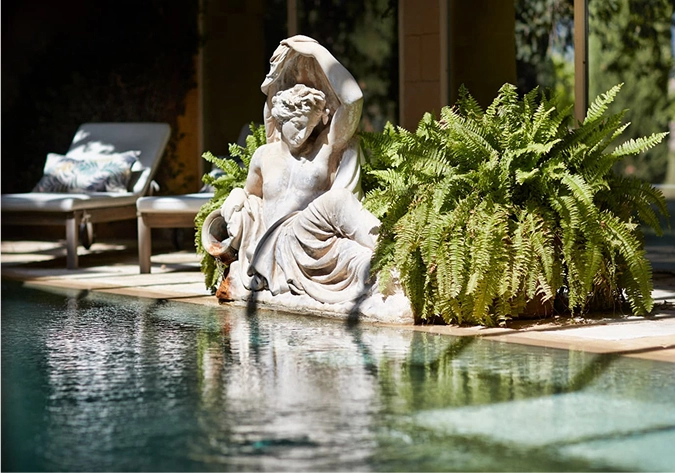
Then, in the late 1990s, Lord Paul and Lady Hamelin fell under the charm of the estate and became its new owners. They undertook extensive renovations both of the buildings and the gardens: construction of swimming pools, restoration of the Bergerie and the Stable.
However, feeling that the cellar built by Madame Faucher-Poilpot spoiled the breathtaking view of the mountains, they decided to demolish it. Although they continued to operate the estate, wine production was definitively discontinued.
Today
Restructuring of the Vineyard
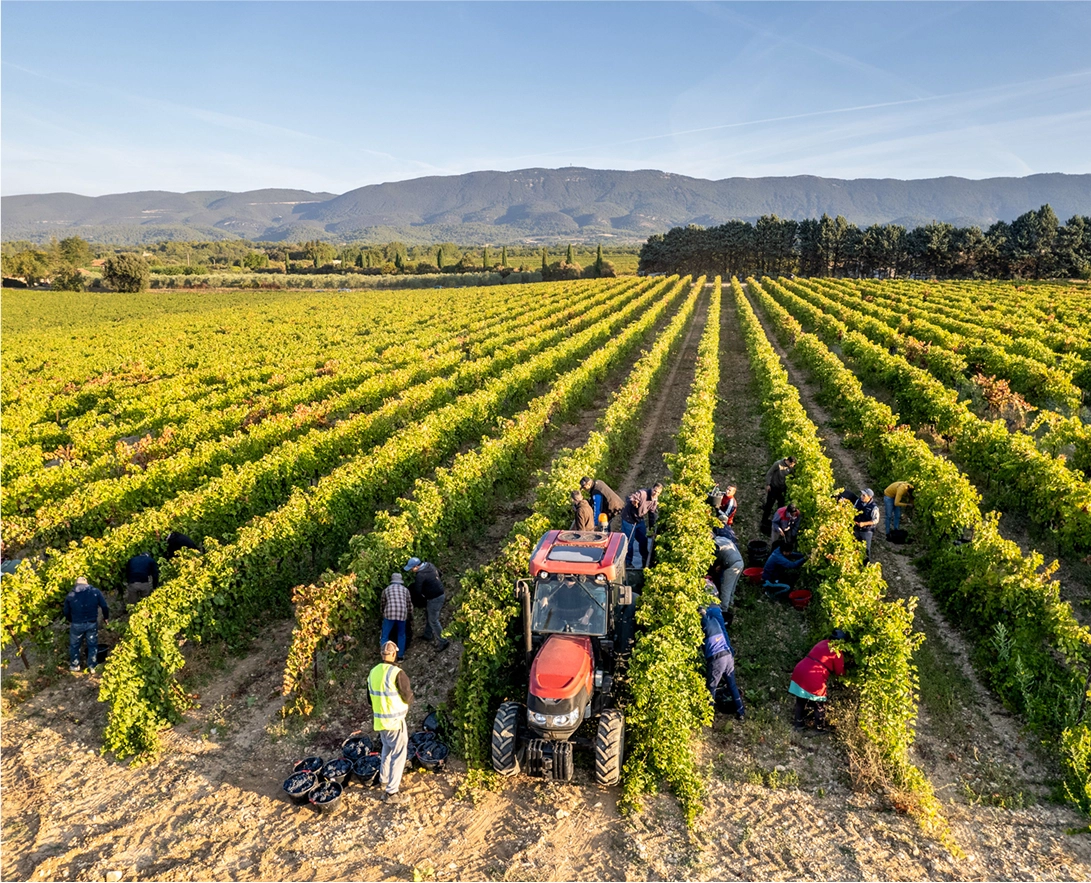
The Gattaz Family bought the estate in 2017 with the goal of preserving this unique heritage and reviving the wine production, thus putting an end to the halt of wine production under Lord Paul and Lady Hamlyn. It is in this context that the Château de Sannes brand was born.
Starting in 2018, a vineyard restructuring plan was launched, accompanied by new plantings. A modern winery, equipped with advanced winemaking equipment to preserve the quality of the grapes from harvest, was built and inaugurated in March 2020.
The full conversion of the vineyard to organic farming became a priority, and the family obtained AB (organic) certification for the 2020 harvest. Today, the vineyard offers four ranges of wines available in all three colors.